

If you are running a real business in 2025, the last thing you want is a generic website that looks identical to hundreds of others. This is exactly why template websites don’t work for real businesses anymore. With increasing competition, smart customers, and advanced SEO requirements, relying on templates can cost you leads, credibility, and revenue. In this detailed guide, we will break down all the major website template drawbacks and explain why custom web design is the smarter, more profitable choice.
Whether you are a startup, service provider, eCommerce brand, or local business, understanding the website template drawbacks will help you avoid costly mistakes and choose the right direction for your online presence.

Before we go deeper, if you need a custom, conversion-focused website built for your business, you can explore 24siteshop’s Website Development & Design Services:
https://24siteshop.com/website-development-and-design-services-in-guwahati/
Now let’s dive into why template websites don’t work for real businesses and what you should do instead.
1. Template Websites Look Generic – They Don’t Represent Your Brand
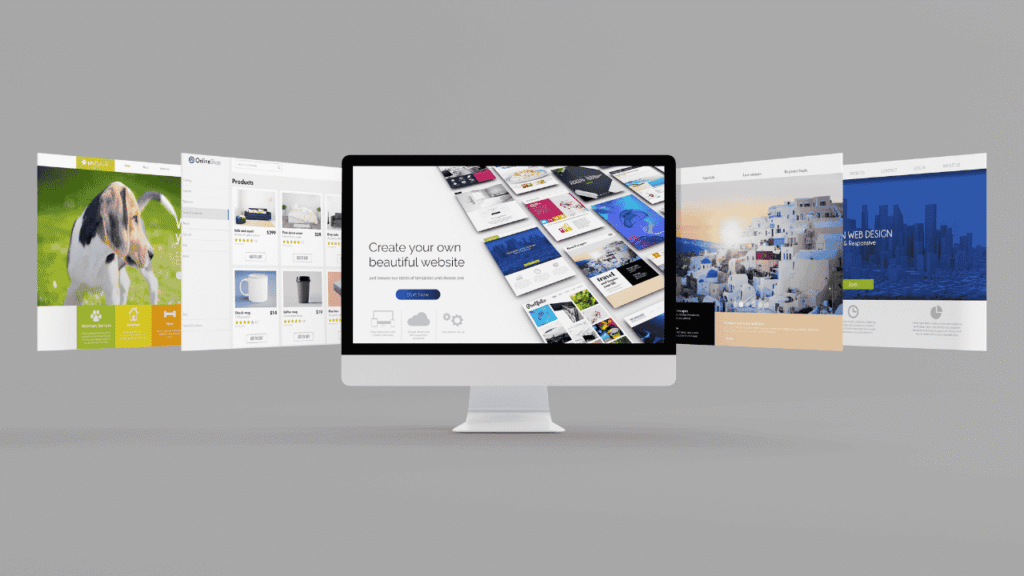
One of the biggest website template drawbacks is that templates are not created for your brand. They follow pre-designed layouts, fixed color schemes, and limited design options. As a result, your website ends up looking like hundreds of others using the same template.
Real businesses need strong branding. Your colors, messaging, layout, visual hierarchy, and user flow should be unique to your company. But template websites simply cannot offer this because they are built for mass usage, not brand identity.
This is one of the strongest reasons why template websites don’t work for real businesses aiming to look trustworthy and premium.

2. Website Template Drawbacks Hurt Your SEO Performance
Search engines hate duplicated layouts, bloated theme code, and poorly optimized pre-built structures. These template-based issues directly hurt rankings. Because of these website template drawbacks, your SEO becomes weaker, slower, and less competitive.
Here’s how templates damage SEO:
- Too many unnecessary scripts slow down load time.
- Duplicate layout structure makes your site less unique in search engines.
- Template builders often use heavy drag-and-drop code.
- Limited control over technical SEO elements.
- Poorly optimized mobile responsiveness.
This is another reason why template websites don’t work for real businesses that depend on organic traffic.
If you want an SEO-optimized custom website instead of a template, here is a service link you can use:
https://24siteshop.com/website-development-and-design-services-in-guwahati/

3. Poor Customization Limits Your Growth
Templates might look appealing at the beginning, especially for beginners. But as your business grows, you will quickly face customization restrictions. This is another significant website template drawback.
Here are some tasks that are harder (sometimes impossible) with templates:
- Adding advanced booking systems
- Integrating CRM tools
- Creating unique landing pages
- Designing custom user flows
- Adding automation
- Creating a unique branding experience
This explains why template websites don’t work for real businesses that want flexibility, scalability, and long-term performance.
If you plan to scale later, templates will block your growth instead of supporting it.
4. Templates Come With Hidden Costs (More Than You Imagine)
Most people choose templates because they think they are “cheap.” But in reality, template websites have many hidden costs that pile up over time.
Common hidden template costs:
- Frequent theme updates
- Plugin conflicts requiring developer fixes
- Paid extensions
- Paid widgets
- Paid support tickets
- Paid templates for every redesign
- Security vulnerabilities requiring paid patching
These website template drawbacks make templates much more expensive than custom websites in the long run.

5. Templates Offer Poor Performance & Slow Speed
Speed is one of the strongest ranking factors today. A website that loads in more than 3 seconds loses up to 50% of visitors. This is where website template drawbacks become most obvious.
Why templates are slow:
- They contain unused CSS & JS files
- They rely heavily on third-party plugins
- Page builders add unnecessary code
- Pre-loaded features slow down performance even if you don’t use them
This is why template websites don’t work for real businesses that need speed, conversions, and reliability.
If you want premium hosting instead of template-based slow websites, you can check this hosting service:
https://24siteshop.com/hosting/
6. Templates Fail at Conversion Optimization
Conversion means turning visitors into leads or buyers. Real businesses depend on conversions to grow. But another major website template drawback is that templates are not built for conversions.
Templates provide:
- Generic layouts
- Poor CTA placement
- Weak UX structures
- Random content flow
- No behavioral targeting
- No testing or analytics strategy
Real business websites must be designed around how visitors behave, what they click, and how they convert. This is why template websites don’t work for real businesses that depend on leads and sales.
If you want custom conversion-focused landing pages, check:
https://24siteshop.com/google-ads-service/

7. Limited Integration Options (CRM, WhatsApp, Payments, Automation)
Real businesses often need multiple integrations such as:
- WhatsApp Marketing
- CRM
- Payment Gateways
- Marketing Automation
- Advanced Analytics
- Booking Systems
- Lead Management Tools
Most templates are not built to support such integrations. This is a major website template drawback because businesses cannot automate their operations or scale properly.
For example, if you want WhatsApp marketing or automation:
https://24siteshop.comcom/whatsapp-business-marketing/
This is another reason why template websites don’t work for real businesses that require continuous automation.
8. Template Websites Are Not Built for Advertising
If you run Google Ads, Facebook Ads, or remarketing campaigns, your landing pages must be optimized for conversions. Unfortunately, templates don’t meet these advertising requirements.
Ads require:
- Fast loading speed
- Highly relevant user experience
- Custom landing page layout
- A/B tested designs
- Mobile-first UI
- Minimal distractions
These website template drawbacks make your ad campaigns expensive and ineffective.
If you run ads, you need custom landing pages. You can use:
Google Ads: https://24siteshop.com/google-ads-service/
Facebook Ads: https://24siteshop./facebook-ads-services/
9. Poor Mobile Responsiveness
More than 70% of visitors check websites on mobile devices. But most templates break on mobile because they were not designed with real business mobile behavior in mind.
Common mobile issues with templates:
- Broken layouts
- Overlapping text
- Slow loading
- Misplaced CTAs
- Hard-to-read fonts
- Poor navigation
Because of these website template drawbacks, your bounce rate increases drastically. This is another big reason why template websites don’t work for real businesses that depend on mobile users.
10. Templates Offer Weak Security
Templates rely on third-party plugins and outdated theme files. This creates security risks such as:
- Malware injections
- Plugin conflicts
- Theme vulnerabilities
- Hacking attempts
- Broken functionalities
Real businesses cannot afford these problems. A custom-coded website is cleaner, lighter, and far safer.
For secure website maintenance services, you can check:
https://24siteshop.com/website-maintenance-plan/
11. No Unique Selling Point (USP) in Design
Your business has a unique story, a unique offer, and a unique brand message. But templates cannot express that because they are rigid and generic. This becomes one of the biggest website template drawbacks affecting branding and customer trust.
If your website doesn’t look unique, your brand won’t feel unique. This directly affects conversions, sales, and long-term brand identity.
This is why template websites don’t work for real businesses looking to stand out from competitors.
12. Templates Cannot Scale With Growing Businesses
A template website works for a basic portfolio. But once your business grows, you will need:
- More pages
- Custom functionalities
- Faster performance
- Strong SEO structure
- Automation workflows
- Unique landing pages
- High-quality technical design
Templates simply cannot support these growing needs. This is another reason why template websites don’t work for real businesses planning long-term expansion.
13. eCommerce Templates Limit Your Revenue
If you are selling products, template-based online stores come with limitations:
- Limited product page customization
- Weak checkout optimization
- Slow speed
- Poor UX
- Hard to scale
For better eCommerce performance, here is the Shopify plan link you provided:
https://24siteshop.com/shopify-website-plan/
Conclusion: Choose Custom Websites, Not Templates
After exploring all the major website template drawbacks, it is clear why template websites don’t work for real businesses in 2025. They limit your growth, hurt your SEO, slow down your performance, weaken your branding, and create long-term problems that cost you more money and more time.
If your business is serious about online presence, a custom-designed, fast, SEO-optimized, conversion-focused website is the only right choice.
For professional website development, performance optimization, custom design, and business-focused solutions, you can contact 24siteshop today:
Phone: +91 9394847289
Email: contact@24siteshop.com
Or explore our services directly:
Website Development: https://24siteshop.com/website-development-and-design-services-in-guwahati/
Shopify Website Plan: https://24siteshop.com/shopify-website-plan/
Google Ads Service: https://24siteshop.com/google-ads-service/
Facebook Ads Service: https://24siteshop./facebook-ads-services/
Hosting Services: https://24siteshop.com/hosting/
WhatsApp Business Marketing: https://24siteshop.comcom/whatsapp-business-marketing/
Website Maintenance Plan: https://24siteshop.com/website-maintenance-plan/