


Many interior designers believe that Instagram or social media alone is enough to get clients. While social platforms are useful for visibility, they are not reliable when it comes to building long-term trust and attracting serious, high-budget projects. This is where the role of a professional interior design website designer becomes important.
When a potential client is genuinely interested in hiring an interior designer, the first thing they usually do is search on Google and visit the designer’s website. A well-designed website creates an immediate impression of professionalism and credibility. It allows you to showcase your portfolio in a structured manner, explain your design process, and clearly guide visitors to contact you.
Unlike social media, a website gives you full control over your brand image. It helps you highlight your experience, completed projects, and unique design style without distractions. A website built by an experienced interior design website designer works like a digital showroom, available 24/7, helping you attract better clients while you focus on creating beautiful spaces.
How Clients Judge Interior Designers Online
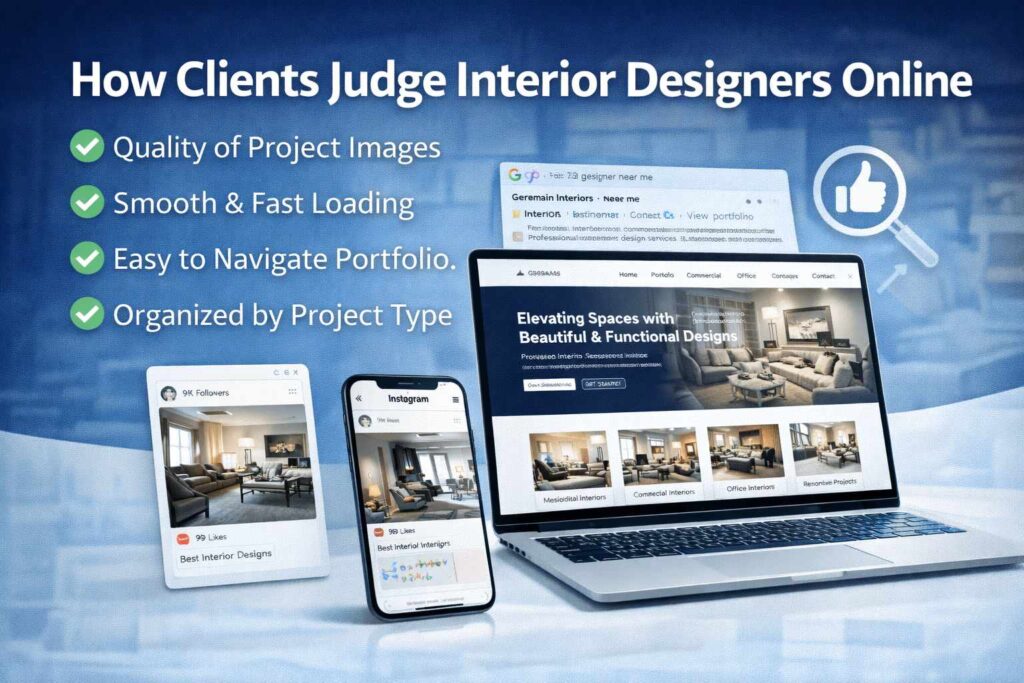
Before contacting an interior designer, most clients spend time researching online. They compare multiple designers, look at portfolios, and try to understand who feels trustworthy and professional. This is where the work of an interior design website designer plays a major role in shaping first impressions.
When a client lands on an interior designer’s website, they quickly notice a few things — the quality of project images, how smoothly the site loads, how easy it is to browse different projects, and how clearly the designer explains their services. A cluttered or slow website often creates doubt, even if the designer is talented. On the other hand, a clean, well-structured website instantly signals professionalism and attention to detail.
Clients also judge interior designers based on how organized the portfolio is. Separate sections for residential, commercial, office, or renovation projects make it easier for visitors to relate to your work. A website created by a skilled interior design website designer presents this information in a way that feels premium, calm, and confident. This positive experience increases the chances of a visitor taking the next step — calling, messaging on WhatsApp, or submitting an enquiry.
Role of an Interior Design Website Designer (Not Just a Web Designer)
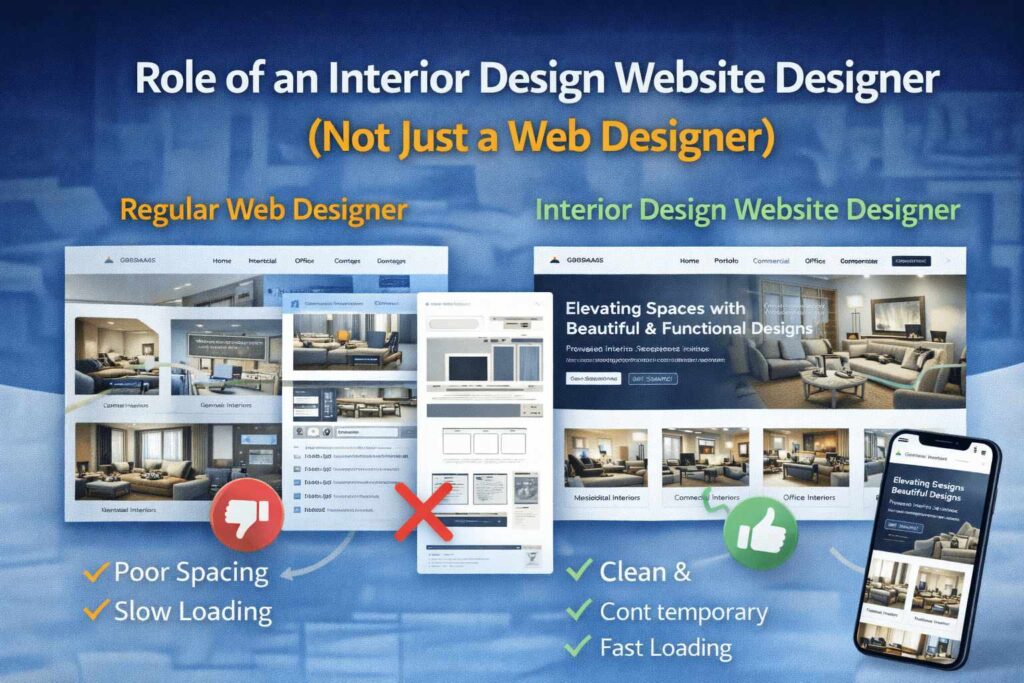
Many people think any web designer can build an interior design website, but that’s not true. Interior design websites are very different from regular business websites, which is why working with a dedicated interior design website designer makes a big difference.
Interior design websites are image-heavy by nature. High-quality project photos are essential, but if they are not handled properly, they can slow down the website and frustrate visitors. A professional interior design website designer knows how to balance visual beauty with performance by optimizing images without losing quality. This ensures the website loads fast while still looking premium.
Another important factor is layout. Interior design websites should feel clean, spacious, and minimal — just like good interior design itself. Poor spacing, cluttered sections, or unnecessary animations can ruin the user experience. A skilled interior design website designer creates layouts that guide visitors smoothly through your work, helping them focus on your projects instead of getting distracted.
Most importantly, an interior design website designer understands how to design for mobile users. Many clients browse portfolios on their phones, so the website must look and function perfectly on smaller screens. This attention to detail helps create a strong first impression and builds trust with potential clients.
Essential Features Every Interior Design Website Must Have
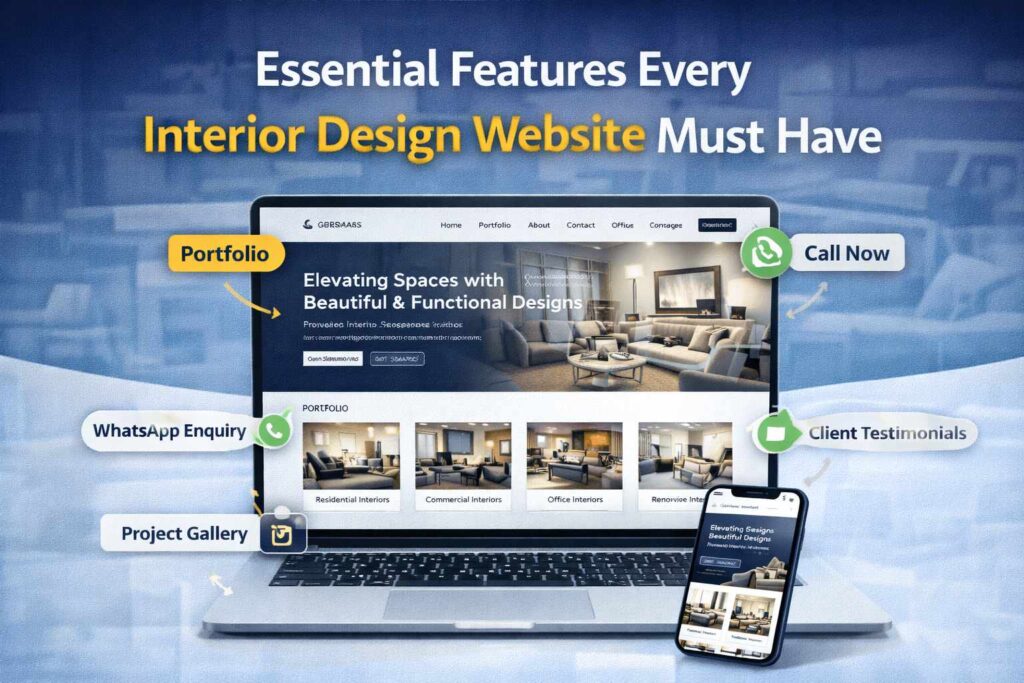
A successful interior design website is not just about beautiful images — it’s about how those images, content, and actions work together. This is where an experienced interior design website designer focuses on both presentation and functionality.
The most important feature of an interior design website is a well-organized portfolio. Projects should be grouped clearly, such as residential, commercial, office, or renovation work, so visitors can quickly find what matches their needs. High-quality image galleries with smooth viewing options help clients spend more time exploring your work.
Another essential feature is easy communication. Clear WhatsApp buttons, call buttons, and enquiry forms should be visible on every important page. Many clients prefer quick WhatsApp conversations, especially when they want to share space photos or ask basic questions before meeting.
A strong “About” section also plays a big role. Clients want to know who they are working with — your experience, design philosophy, and approach. Testimonials or short client feedback further build trust. A professional interior design website designer ensures all these features are placed naturally, without clutter, so the website feels premium and easy to use.
Website Is Only Step One – What to Do After Your Website Is Complete
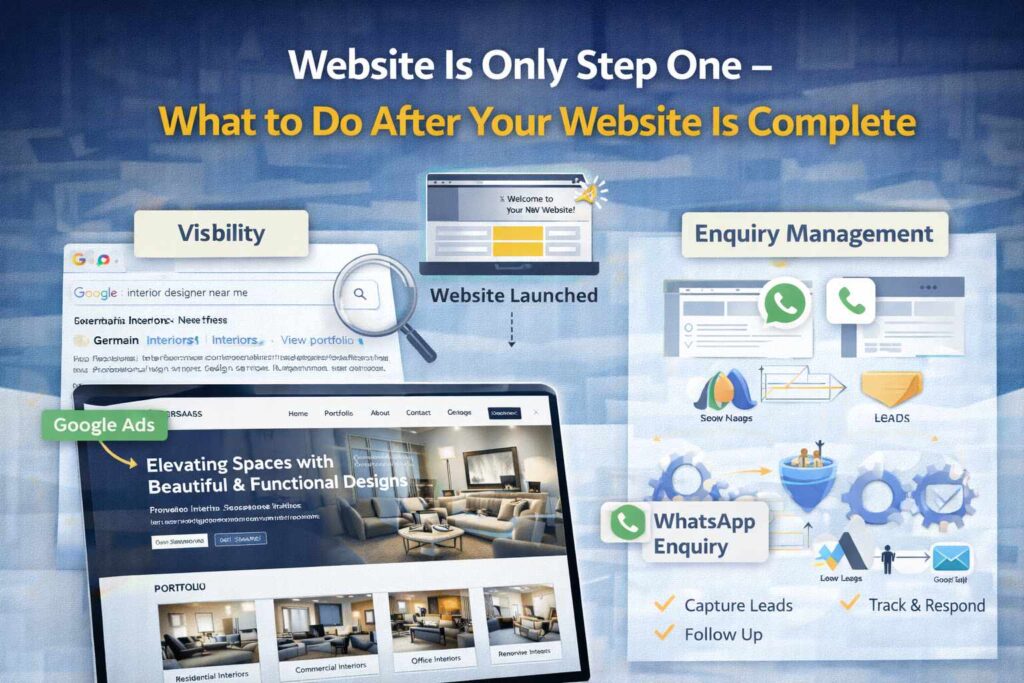
Many interior designers feel their job is done once the website goes live. In reality, that is only the first step. A website without traffic and follow-up is like a beautifully designed showroom with no visitors. This is where guidance from an experienced interior design website designer becomes valuable even after the website launch.
Once your website is live, the next focus should be visibility. Your site must be discoverable on Google when potential clients search for interior designers. This can be done through search ads, basic SEO setup, and local optimization. Without this, even a well-designed website may not receive enquiries.
The second important step is enquiry management. When a visitor fills out a form or clicks on WhatsApp, that lead must be captured and followed up properly. Many enquiries are lost simply because there is no system in place to track or respond on time. A professional interior design website designer plans the website in a way that supports follow-up tools, automation, and future marketing activities.
In short, the website should act as the foundation. What you do after launch — promotion, follow-up, and communication — is what actually turns website visitors into real interior design clients.
How Google Ads Can Grow an Interior Design Business Faster
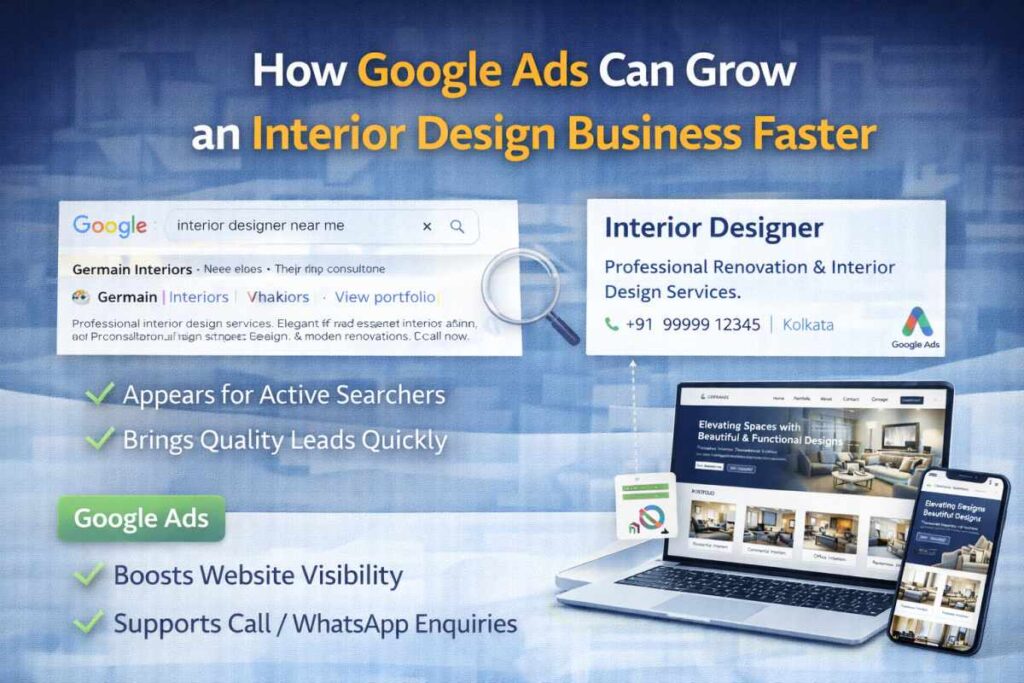
Once your website is live, one of the fastest ways to start getting enquiries is through Google Ads. Many interior designers wait for months hoping that clients will find them organically, but paid search can bring results much quicker when done correctly. An experienced interior design website designer always keeps Google Ads in mind while structuring the website.
Google Ads work well for interior designers because they target people who are already searching with intent. When someone types “interior designer near me” or “home interior designer,” they are usually ready to talk to a professional. Showing your website and phone number at that exact moment can bring high-quality leads.
A properly built website helps Google Ads perform better. Fast loading pages, clear service sections, and strong portfolio visuals increase the chances of visitors contacting you. This is why an interior design website designer does not just focus on design but also ensures the website supports ads, call buttons, and WhatsApp enquiries.
With Google Ads, interior designers can control their budget, target specific locations, and pause or scale campaigns anytime. When combined with a good website and proper follow-up, Google Ads become a powerful tool to consistently attract serious clients.
Why WhatsApp Marketing Is the Key for Interior Designers
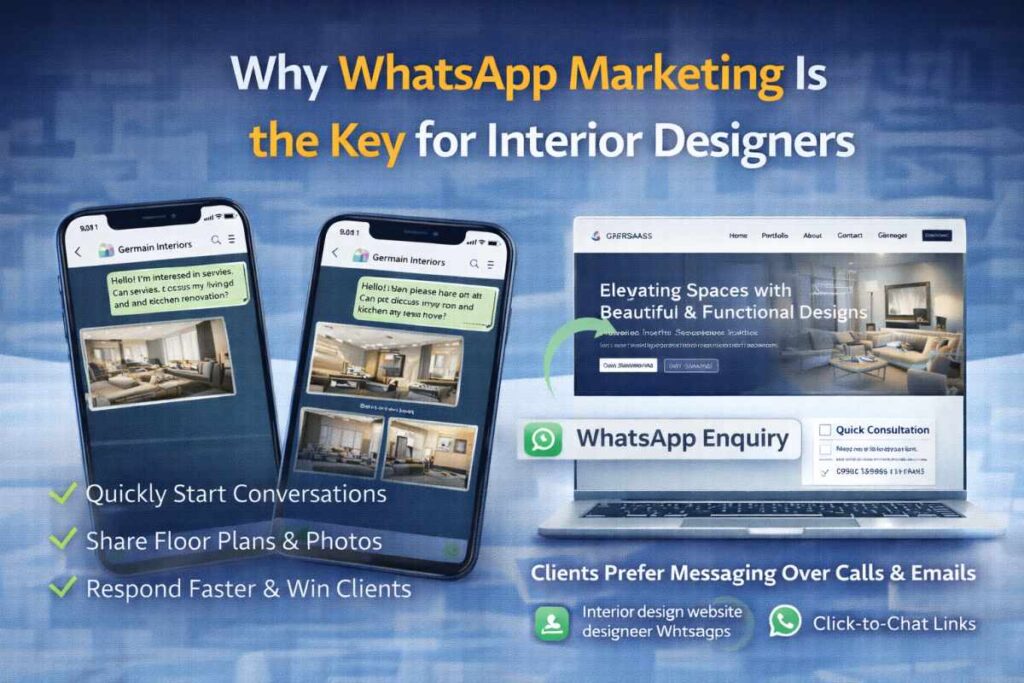
For interior designers, communication speed plays a huge role in converting enquiries into actual clients. Most people looking for interior design services prefer quick and easy conversations rather than long emails or repeated phone calls. This is why WhatsApp marketing has become one of the most powerful tools, and why an experienced interior design website designer always integrates WhatsApp properly into the website.
When a visitor clicks on WhatsApp from your website, they are already interested in your work. They may want to share floor plans, room photos, budgets, or timelines. WhatsApp makes this process smooth and comfortable for both the client and the designer. Faster replies often lead to higher trust and better chances of closing the project.
Many interior designers lose potential clients simply because they reply late or forget to follow up. With WhatsApp marketing, you can respond quickly, send portfolio images, share location details, and keep the conversation active. A professional interior design website designer sets up WhatsApp buttons, click-to-chat links, and mobile-friendly access so that no enquiry is missed.
In today’s market, WhatsApp is not just a messaging app — it is a direct sales and follow-up channel that helps interior designers convert more enquiries into confirmed projects.
Google Sheet Lead Tracking – Don’t Lose Clients Due to No Follow-Up
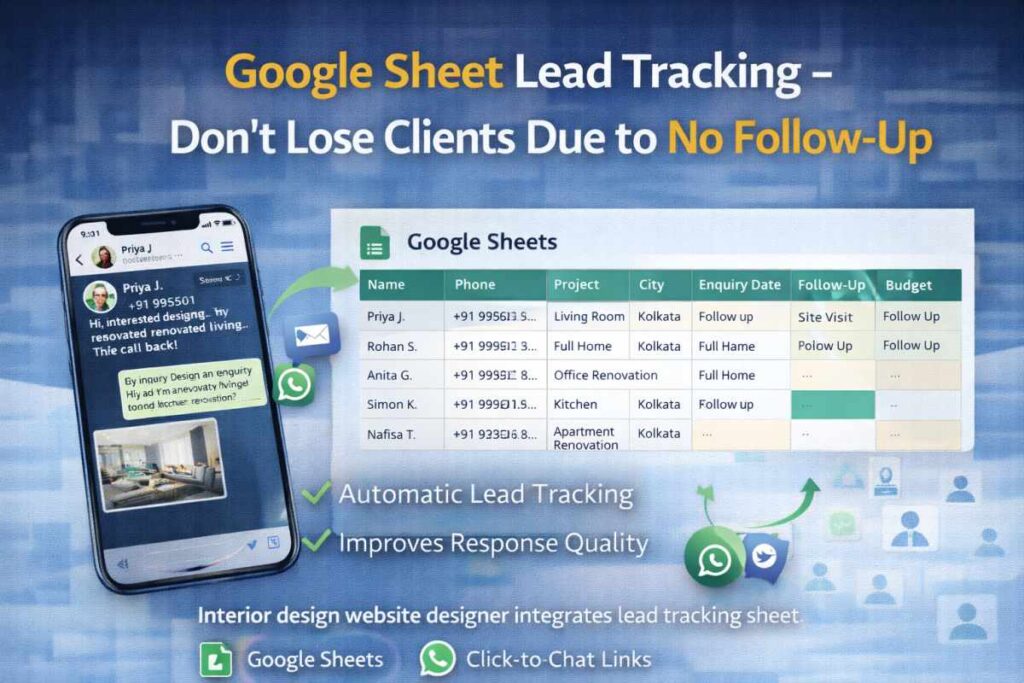
One of the biggest reasons interior designers lose potential projects is not lack of enquiries, but lack of follow-up. Many designers receive calls, WhatsApp messages, or form submissions, but after a few days, the details get forgotten or mixed up. This is where a simple system like Google Sheet lead tracking becomes extremely valuable, and something a smart interior design website designer always plans for.
When your website is connected to a lead tracking sheet, every enquiry gets saved automatically with details like name, phone number, project type, location, and date. This makes it easy to see who contacted you, who needs a follow-up, and who is ready for the next discussion. Instead of relying on memory or scattered chats, everything stays organised in one place.
A professional interior design website designer helps structure enquiry forms and WhatsApp integrations so that leads can be tracked easily. You can even add columns for follow-up status, budget discussion, site visit, or proposal shared. This small habit improves response time and professionalism.
In interior design, projects are high-value and decision cycles are long. A proper follow-up system ensures no serious client slips away just because of missed communication.
WhatsApp Automation + Google Sheet Integration for Better Follow-Ups
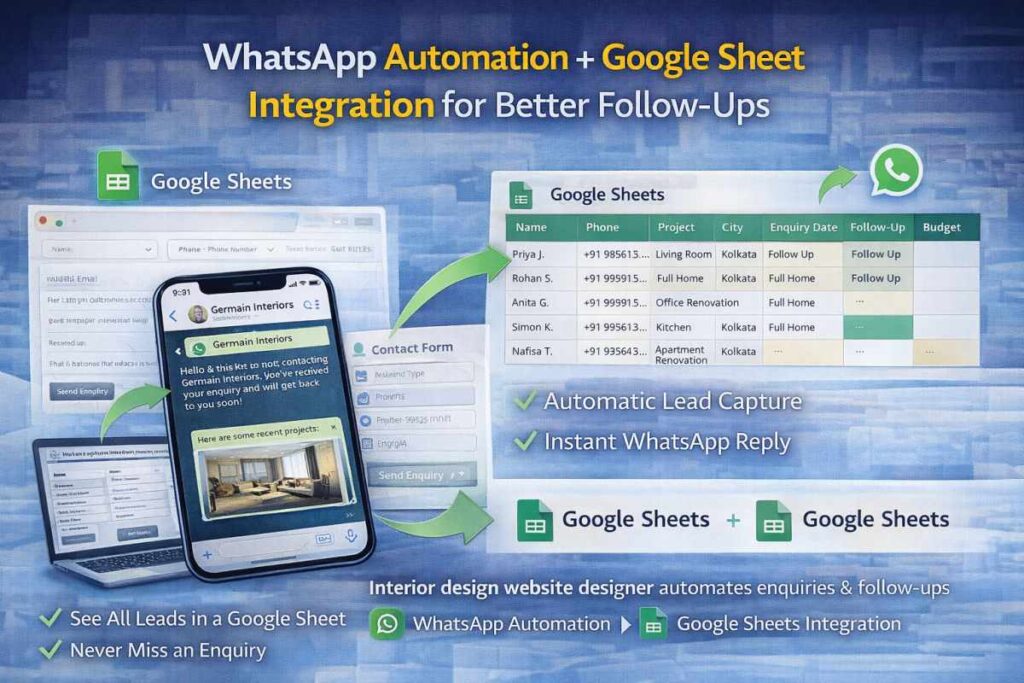
Handling enquiries manually works only when the number of leads is very small. As soon as enquiries increase, many interior designers struggle to respond on time, forget to follow up, or lose track of conversations. This is where WhatsApp automation combined with Google Sheet integration becomes a powerful system, and something a smart interior design website designer always recommends.
With proper automation, every enquiry coming from your website — whether through a form, WhatsApp button, or call request — can be automatically saved into a Google Sheet. At the same time, an instant WhatsApp auto-reply can be sent to the client, confirming that their enquiry has been received. This small step builds trust and assures the client that you are responsive and professional.
A professional interior design website designer sets up this system so that you don’t need technical knowledge to manage it. You can easily see all leads in one place, assign follow-up status, and know exactly who needs a callback or site visit discussion. Automation does not replace personal communication, but it ensures no enquiry is missed.
For interior designers handling high-value projects, this system saves time, improves response quality, and increases the chances of converting enquiries into confirmed clients.
Email Marketing for Interior Designers – Simple Automation Using Brevo
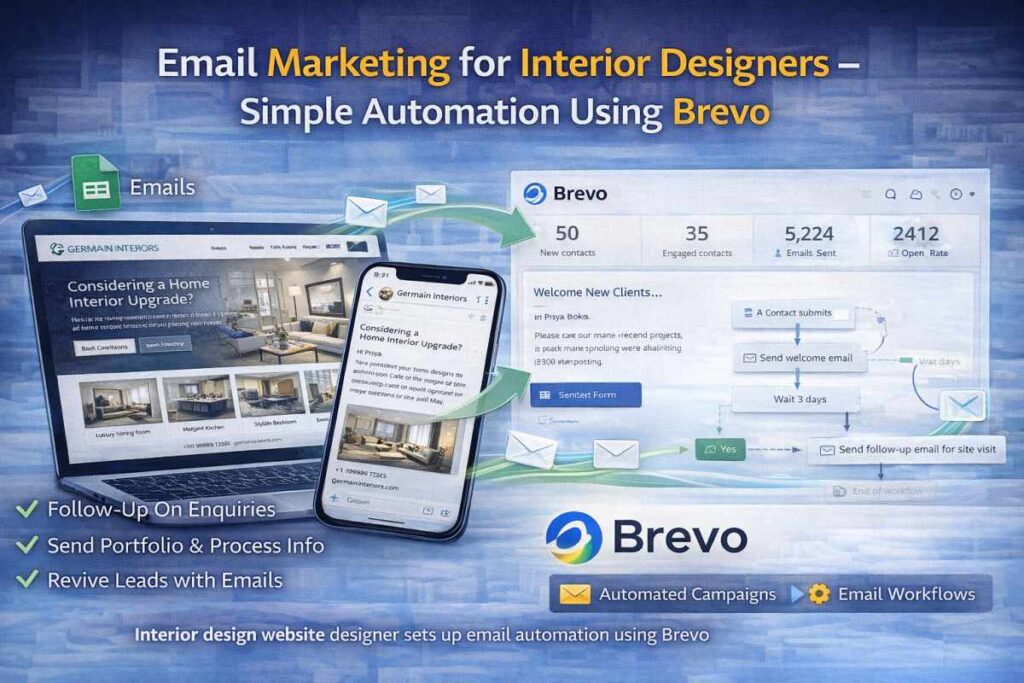
Many interior designers think email marketing is outdated, but in reality, it plays a powerful role in follow-ups and long-term client nurturing. Interior design projects usually take time to finalize, and clients often need reminders, clarity, and reassurance before making a decision. This is where email marketing becomes useful, and something an experienced interior design website designer plans for from the beginning.
Email marketing helps you stay connected with potential clients after the first enquiry. You can send follow-up emails, share portfolio links, explain your design process, or remind clients about site visits and proposals. Even a simple follow-up email can revive a conversation that was going cold.
Tools like Brevo make this very easy, even for beginners. Brevo offers free email credits and basic automation, which is perfect for interior designers starting out. You can set up simple automated emails such as enquiry confirmation, follow-up reminders, or thank-you messages after meetings.
A professional interior design website designer ensures your website forms are connected properly so emails can be sent automatically. Email marketing does not replace WhatsApp or calls, but it supports them by keeping your brand visible and professional. Over time, this builds trust and increases the chances of converting enquiries into long-term interior design clients.
Blogging for Interior Design Websites – Long-Term Growth Strategy
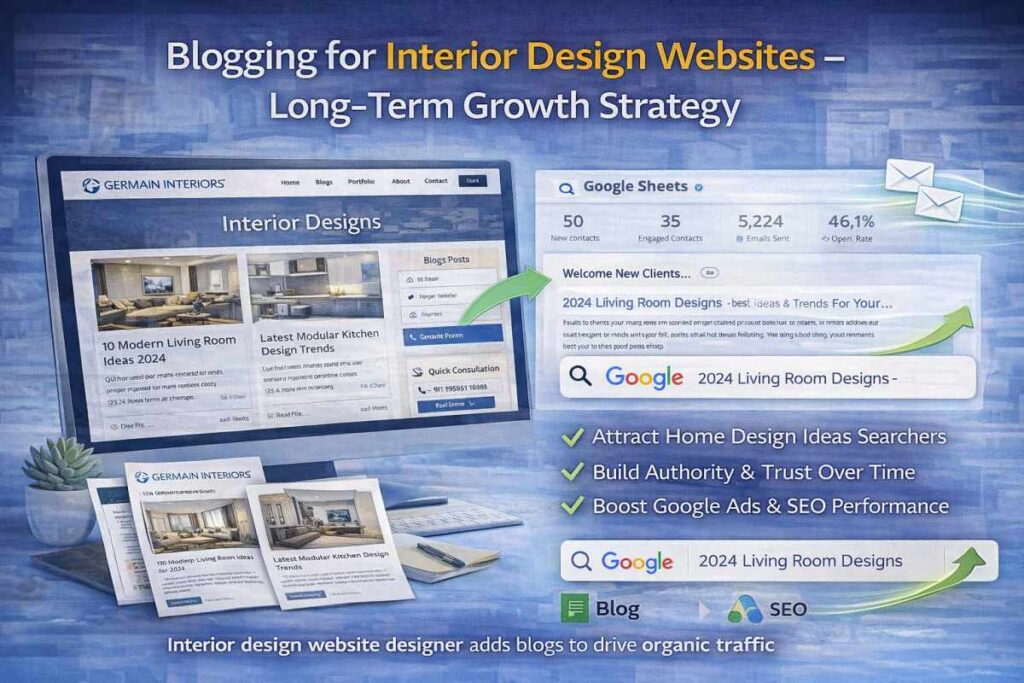
Many interior designers focus only on portfolios and social media, but blogging is one of the most underrated tools for long-term growth. A blog helps your website attract people who are searching for ideas, inspiration, and solutions — even before they are ready to contact a designer. This is why an experienced interior design website designer always recommends adding a blog section to the website.
By writing blogs such as home interior tips, modular kitchen ideas, bedroom design trends, or renovation guides, you increase your chances of appearing on Google for multiple search terms. These visitors may not contact you immediately, but they start recognising your brand and expertise over time. When they finally decide to hire an interior designer, your name feels familiar and trustworthy.
Blogging also supports Google Ads and SEO. A website with useful content usually performs better in search results and ad quality scores. A professional interior design website designer structures blogs properly with headings, images, and internal links so they are easy to read and easy for Google to understand.
Most importantly, blogs help position you as an expert, not just a service provider. Over time, this builds authority, brings organic traffic, and creates a steady pipeline of potential interior design clients without relying only on paid ads.
Affordable Website Design Plans for Interior Designers (With EMI)
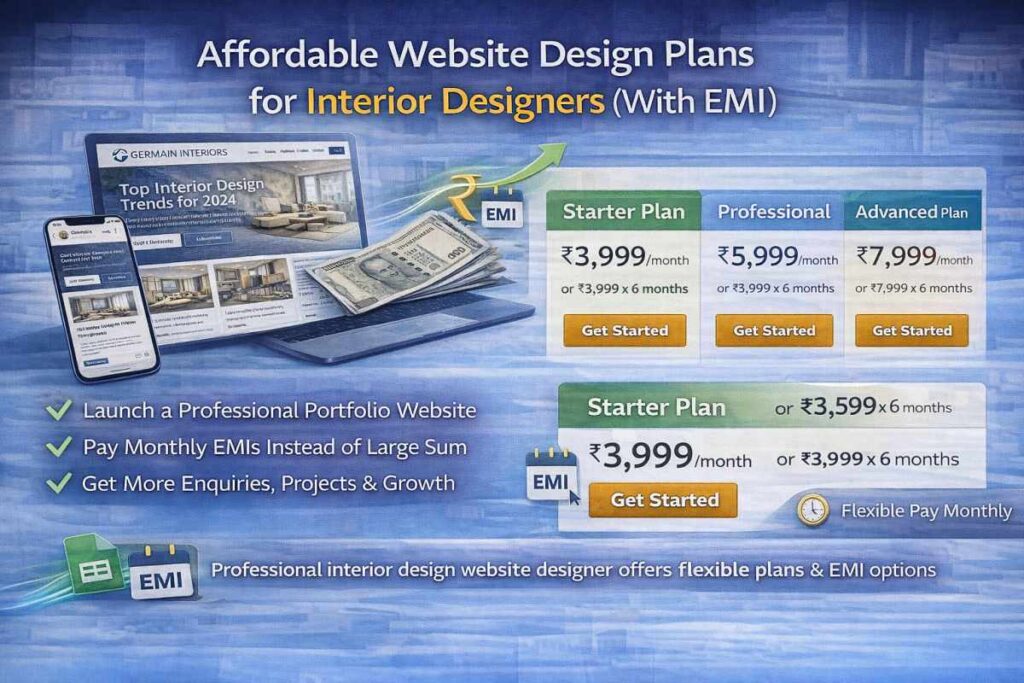
Many interior designers delay building a professional website because they assume it will be expensive or complicated. In reality, a website does not need to be a heavy upfront investment if it is planned properly. This is why a practical interior design website designer always offers flexible pricing and EMI options, so designers can start without financial pressure.
Interior designers are creatives, and most of their investment already goes into materials, teams, and ongoing projects. EMI-based website plans allow you to launch your website immediately and pay gradually while the website itself helps bring enquiries and projects. Instead of waiting months to save money, you can start building your online presence right away.
Affordable plans usually cover the essentials first — a clean design, portfolio showcase, WhatsApp integration, enquiry forms, and mobile responsiveness. As your business grows and you start receiving enquiries, you can easily upgrade to more advanced features like multiple project pages, SEO setup, booking forms, and marketing tools. A professional interior design website designer structures these plans in a way that supports growth, not limitations.
The goal is simple: start small, stay professional, and scale confidently. With the right plan and guidance, your website becomes an asset that grows along with your interior design business.
Starter Plan – ₹3,999 (Best for Freelance Interior Designers)
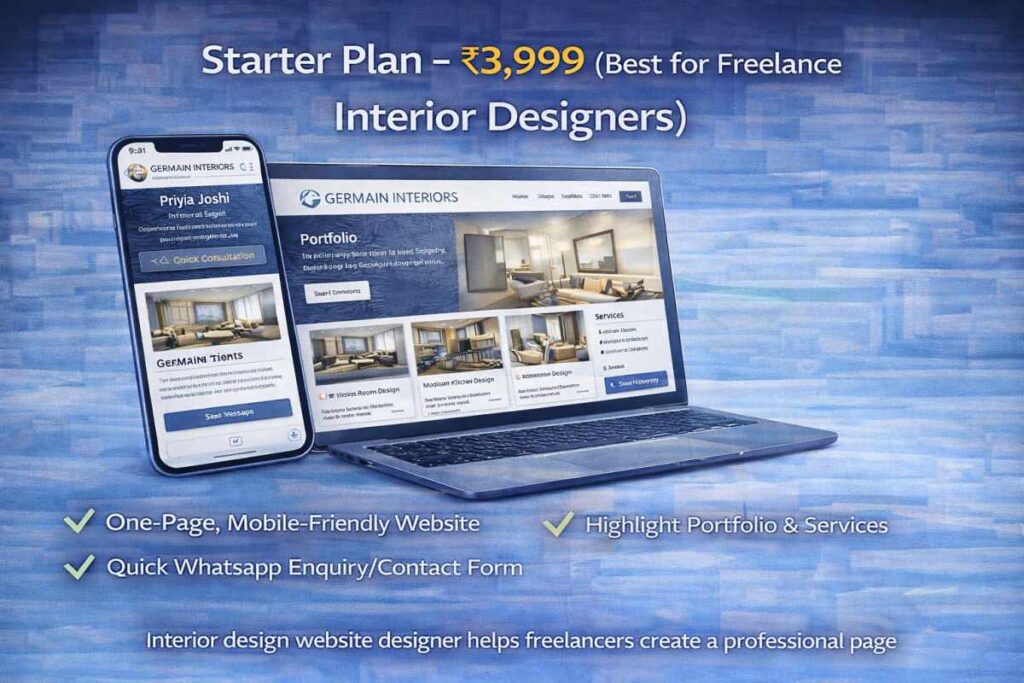
The Starter Plan is designed for freelance interior designers or small studios who want to build a professional online presence without heavy investment. Many designers are at an early stage where they need visibility, credibility, and enquiries — not complex systems. This is exactly where guidance from an experienced interior design website designer makes a difference.
With this plan, the focus is on creating a clean, visually appealing one-page website that highlights your portfolio, services, and contact details clearly. It works like a digital visiting card, but much more powerful. Clients can view your work, understand your design style, and contact you instantly through WhatsApp or an enquiry form. For freelancers, this is often enough to start receiving genuine enquiries.
A professional interior design website designer ensures that even a single-page website looks premium, loads fast, and works perfectly on mobile devices. The idea is not to overwhelm visitors but to guide them smoothly toward contacting you. As your business grows and you start getting regular enquiries, this starter website can be upgraded easily into a multi-page or marketing-focused site.
For designers who want to start smart, stay professional, and grow step by step, this plan is a practical and cost-effective choice.
Gold Plan – ₹7,500 (For Growing Interior Design Studios)

As interior designers start getting regular enquiries, a single-page website often feels limiting. At this stage, designers need more space to explain services, showcase different types of projects, and build stronger trust with potential clients. This is where the Gold Plan becomes a practical choice, and where the guidance of an experienced interior design website designer adds real value.
The Gold Plan is designed for interior design studios that handle multiple project types such as residential, commercial, office, or renovation work. With multiple pages, each service and project category can be presented clearly, making it easier for clients to understand your expertise. This structure also helps your website perform better on Google, as search engines prefer detailed, well-organised content.
Another key advantage of this plan is the appointment or enquiry form. Clients who are serious about interior work often want structured communication, and a proper booking or enquiry system improves professionalism. A skilled interior design website designer ensures the website remains visually clean while supporting these functional features.
For studios that are growing steadily and want better visibility, credibility, and enquiry management, the Gold Plan offers the right balance between affordability and expansion.
Platinum Plan –₹9999 Complete Growth Package for Interior Designers

For interior designers who want to position themselves as premium brands and attract high-value clients, the Platinum Plan is the right choice. At this stage, the website is not just about presence or enquiries — it becomes a complete growth and marketing platform. This is where the experience of a professional interior design website designer truly shows its value.
The Platinum Plan is designed for interior design studios that want full freedom in showcasing their work. With unlimited pages, designers can create detailed project pages, separate sections for residential, commercial, office, or luxury interiors, and present their portfolio in a highly polished way. Custom design ensures the website reflects your brand style, colours, and design philosophy, instead of looking like a generic template.
This plan also focuses heavily on marketing readiness. Advanced SEO structure, Google Analytics, Search Console setup, and proper tracking help you understand where your enquiries are coming from. A skilled interior design website designer builds the website in a way that supports Google Ads, WhatsApp marketing, and future content expansion without rebuilding everything again.
For interior designers aiming for long-term growth, brand authority, and consistent lead generation, the Platinum Plan offers a complete, future-proof solution rather than a short-term fix.
Why Choose Us as Your Interior Design Website Designer
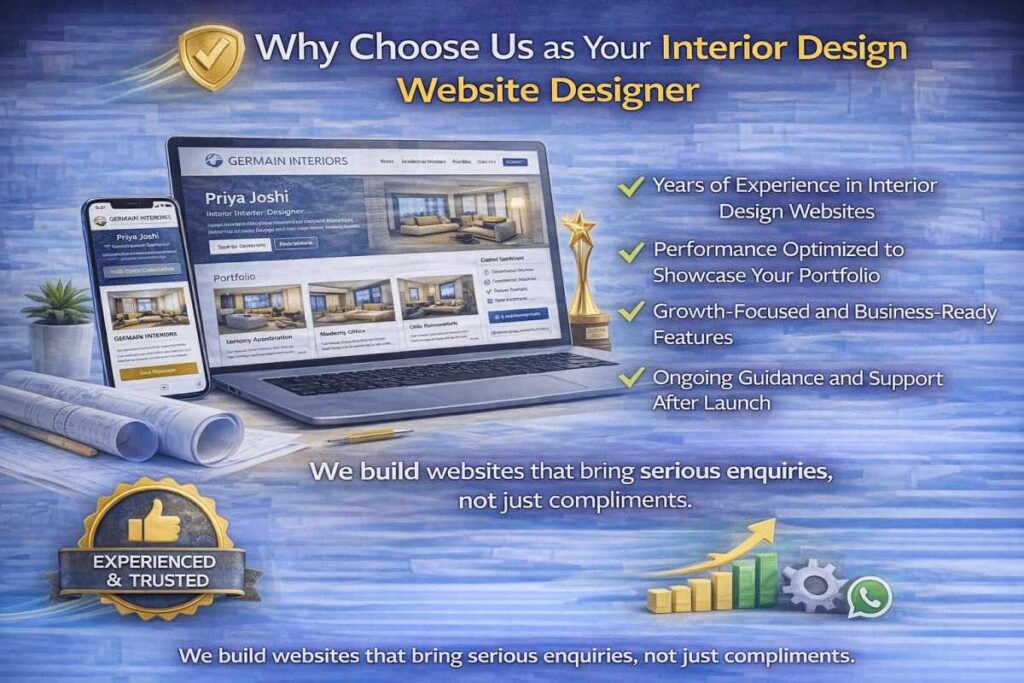
Choosing the right partner to build your website is just as important as choosing materials for a design project. Your website represents your brand, your style, and your professionalism. As an interior design website designer, our approach is not limited to making a website look good — we focus on making it work for your business.
We understand that interior design websites are portfolio-driven and image-heavy, which means performance, layout, and user experience must be handled carefully. Our experience allows us to balance visual quality with fast loading speed, mobile optimization, and clear enquiry flow. We don’t follow a one-template-fits-all method; instead, we design websites that reflect each designer’s unique style and target audience.
Beyond design, we think about growth. From WhatsApp integration and enquiry tracking to Google Ads readiness and follow-up systems, we build websites that support real business activity. We also guide our clients after launch, helping them understand what to do next instead of leaving them on their own.
If you are looking for an interior design website designer who understands both creativity and conversion, our goal is simple — to help your website bring serious enquiries, not just compliments.
Let’s Build an Interior Design Website That Brings Real Clients
At the end of the day, a website should do more than just look good — it should help your interior design business grow. If you have reached this point, it means you are serious about building a strong online presence and attracting better clients. Choosing the right interior design website designer is the final and most important step in this journey.
A professionally built website gives you control over your brand, your portfolio, and your enquiries. When combined with Google Ads, WhatsApp marketing, proper follow-up systems, and content growth, your website becomes a powerful tool that works for you every day. Instead of waiting for referrals or depending only on social media, you start receiving enquiries from people who are actively looking for interior design services.
Whether you are just starting out or running an established studio, the right website can help you move to the next level. The goal is not to build something complicated, but to build something effective — a website that represents your design style, builds trust, and converts visitors into serious enquiries.
If you are looking for an interior design website designer who understands both creativity and business growth, now is the right time to start. Let’s build a website that supports your vision and brings real results.